Anyone can put meat over a fire. Producing the same good kebab on the four hundredth plate of the week, on a busy night, with six orders called at once, is something else entirely. In Turkey the person who does that has a title, ustası, master, and it is not handed out for showing up. It is earned over years at the grill.
Here is what actually separates a kebab master from someone cooking meat over charcoal, and what you can look for the next time you order.
It Starts With the Fire, Not the Meat
The first thing a master manages is the charcoal, and they manage it before a single skewer goes down. What you want is not flame. Flame scorches the outside and leaves the middle raw, and it makes the fat flare. What you want is a settled bed of embers throwing steady, even radiant heat.
A good grill cook also builds heat zones rather than one flat temperature. There is a fierce area for searing, a moderate area for cooking through, and a cooler edge for holding something that is ready while the rest of the order catches up. Watch an experienced cook and you will see skewers constantly moving between these zones. That movement is the technique. The person who lays everything down in one spot and waits is not doing the job.
The Meat Is Decided Long Before the Grill
For minced kebab, the fat ratio is the whole game. Too lean and it dries out and crumbles off the skewer. Too fat and it collapses into the coals and flares up. Traditionally the target sits around one part fat to four or five parts meat, and in Turkey that fat is usually lamb tail fat, which carries flavour that beef fat simply does not.
Then there is the question of chopping versus mincing. A proper Adana is hand chopped with a heavy blade (zırh) rather than pushed through a machine. Machine mincing crushes and smears the fat through the meat, which changes the texture to something closer to a sausage. Hand chopping leaves distinct pieces of meat and fat, so the fat melts during cooking and bastes the kebab from the inside. You can taste the difference immediately.
Skewer Craft Is a Real Skill
Getting minced meat to stay on a skewer through the heat is genuinely difficult, and it is the thing that most obviously separates a trained cook from an untrained one. The meat has to be rested and worked until it binds. It has to be pressed onto the skewer at an even thickness along its whole length, because any thick spot will still be raw when the thin end has dried out.
Flat skewers are used for minced kebab for a reason. A round skewer lets the meat spin freely when you try to turn it, so the same face keeps landing on the heat. A flat skewer turns the meat with it. It sounds like a small detail, and it is the difference between an evenly cooked kebab and a burnt one.
Knowing When to Turn, and When to Leave It Alone
The most common mistake is fussing. Meat needs uninterrupted contact with heat to develop a crust, and every early turn interrupts that. A master turns once, decisively, when the surface has set and released. They also do not press down on the meat, because pressing squeezes out the fat and juice that were the entire point of the fat ratio.
Doneness is judged by feel and by look, not by a timer. Different cuts, different thicknesses, and a fire that shifts through the night mean the clock is close to useless. This is the part that genuinely takes years, and it is why the title exists.
Doner Is Its Own Discipline
The vertical spit is a separate craft again. The stack has to be built by hand in layers, with fat placed deliberately so that it renders downward and bastes everything below it as the spit turns. Build it badly and the top dries out while the bottom stays pale.
Then there is the shaving. The knife takes thin ribbons from the cooked outer layer only, and the cut has to be timed so meat is served at its best rather than sitting and steaming. A well-cut doner has crisp edges and tender interior in the same mouthful.
The Details Around the Grill
Masters also pay attention to what happens off the skewer. Flatbread goes under the grill to catch the drippings rather than being warmed separately. Onions get rested in sumac to take the raw bite off. Peppers and tomatoes are grilled whole so their skins blister and their juices concentrate rather than leak away.
What to Look For as a Diner
You do not need to work a grill to spot the craft. Look for a proper char on the outside with meat still juicy inside, rather than uniform grey. Look for minced kebab that holds together but is not rubbery. Look for a smoky aroma that smells of charcoal rather than lighter fluid. And notice consistency: if the kebab is as good on a busy Saturday as on a quiet Tuesday, someone behind that grill knows exactly what they are doing.
Taste It in South Pattaya
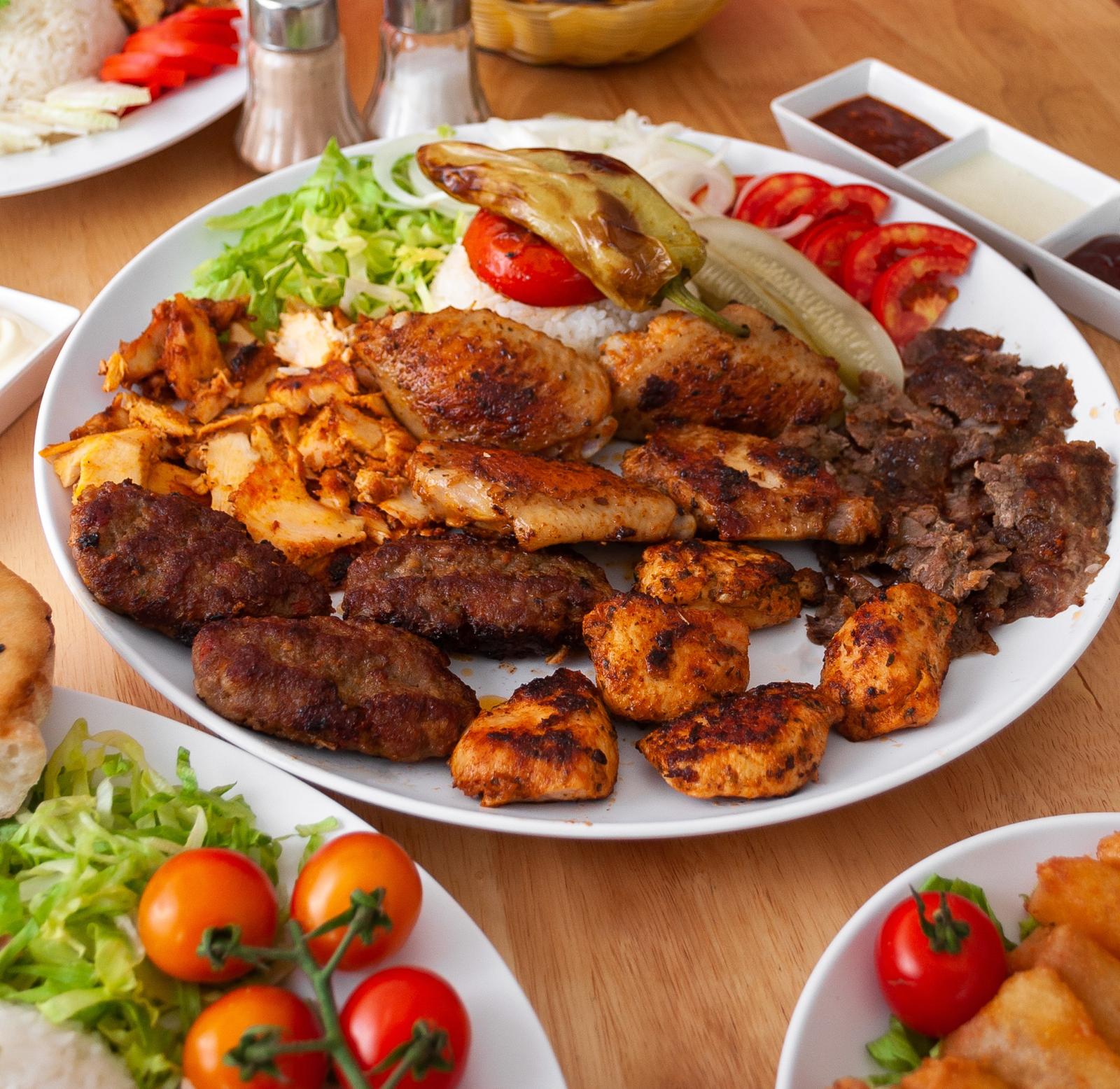
We have been grilling over charcoal on South Pattaya Road since 2015, and everything we cook is halal. If you want to judge the technique for yourself, the mixed grill is the honest test, because it puts kofte, chicken shish, wings and doner on one plate and gives you nothing to hide behind. Have a look at the full menu, or get in touch if you want to check anything before you come. We are open every day from 10:00 AM until 5:00 AM.