
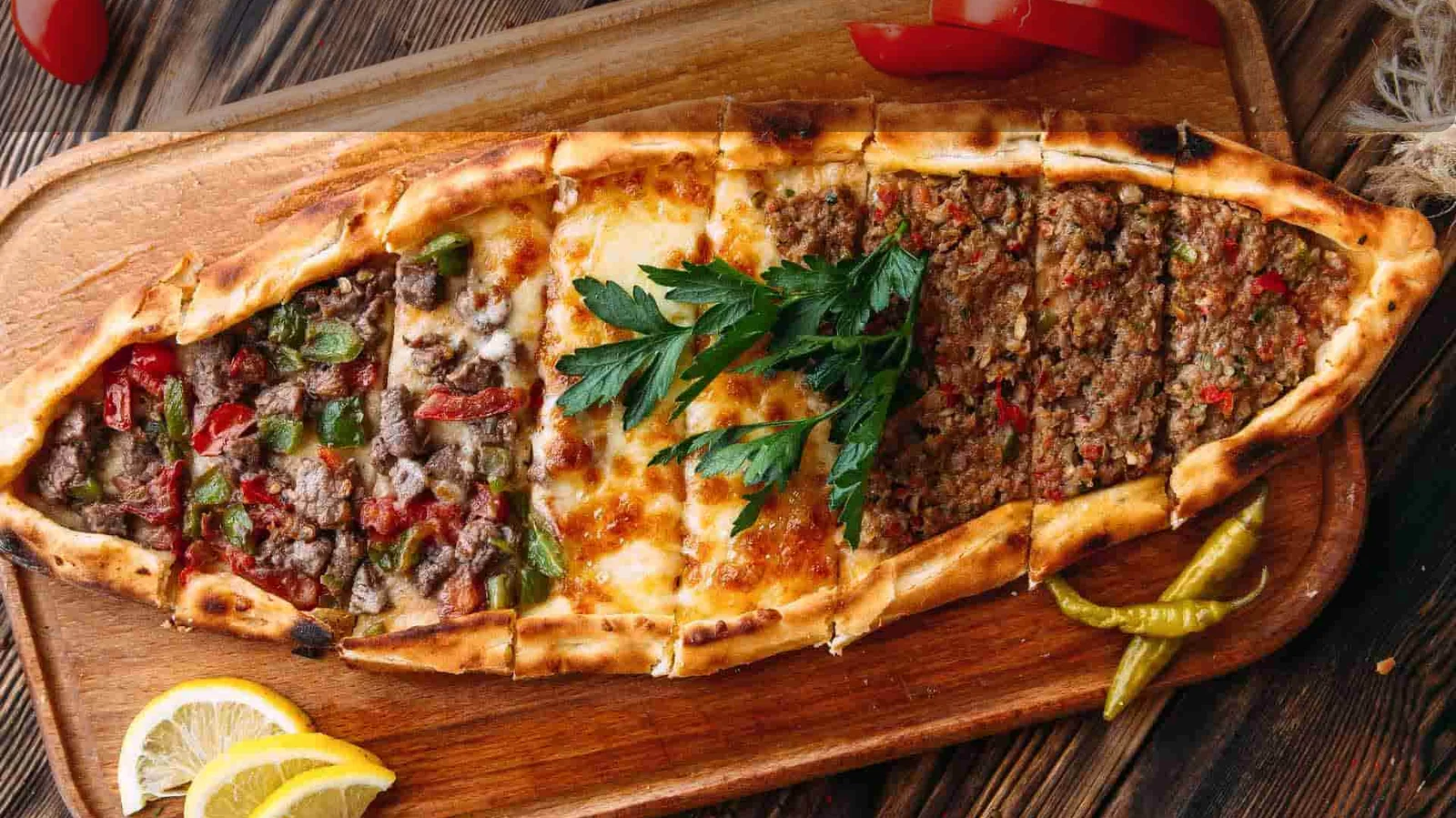
At first glance, Turkish pide and Italian pizza might seem like distant cousins. Both are flatbreads topped with meat and cheese, baked in a hot oven. But spend five minutes comparing the two side by side and the differences become very clear. Turkish pide is a unique dish with its own dough, toppings, and history. The label "Turkish pizza" doesn't do it justice.
The Dough: Completely Different Textures
The foundation of any great pide or pizza starts with the dough. Pizza dough is typically made to be thin and crispy (Neapolitan style) or thicker and chewier (New York style), with a relatively neutral flavour that acts as a base for toppings.
Turkish pide dough, on the other hand, is enriched with a small amount of oil or butter and is pulled into a distinctive elongated oval shape, almost like a boat or a long leaf. The edges are folded up to form a border that cradles the filling. When baked, the dough becomes golden and slightly crispy on the outside while staying soft and fluffy inside. The texture is more like a thick, pillowy flatbread than any pizza style.
The Shape: Oval vs Round
One of the most obvious visual differences is the shape. Pizza is round. Pide is long and oval, typically 40 to 60 cm in length, with pointed ends. The boat-like shape is iconic and instantly recognisable, and it serves a practical purpose: the raised edges keep the generous fillings from spilling out during baking.
Toppings and Fillings: Turkish vs Italian
Pizza toppings are well known globally: tomato sauce, mozzarella, basil, various meats and vegetables. Turkish pide uses an entirely different set of flavours.
- Kiymali Pide: spiced minced meat (lamb or beef) with onions, tomatoes, and green peppers
- Kavurmali Pide: diced roasted meat with peppers and tomatoes
- Kasarli Pide: melted cheese pide, simple and delicious
- Sucuklu Pide: Turkish sausage (sucuk) with egg and cheese
- Mix Pide: a combination of fillings, typically our most popular variety
There's rarely tomato sauce spread over the dough in the Italian style. Instead, the ingredients are mixed together and placed directly on the raw dough before baking, melding their flavours into the bread as it cooks.
How They're Eaten
Pizza is typically sliced into triangular pieces and picked up by hand or eaten with a fork and knife. Pide in Turkey is often eaten by tearing off pieces of the fluffy dough along with the topping, a more communal, hands-on way to eat. It's also common to squeeze fresh lemon juice over the top before eating, adding brightness to the rich meat flavours.
Try Our Turkish Pide in Pattaya
At Palace Istanbul Kebab on South Pattaya Road, our pide is baked fresh to order in a high-temperature oven, giving the dough that characteristic golden crust and soft, fluffy interior. We offer several varieties including kiymali (minced meat), kavurma (roasted meat), and kasarli (cheese) pide. If you're a pizza lover curious about something new, or already a pide devotee, our kitchen serves an authentic taste of Turkey with every order.
Visit us daily 10AM to 5AM or order via Grab delivery for the South Pattaya area.